
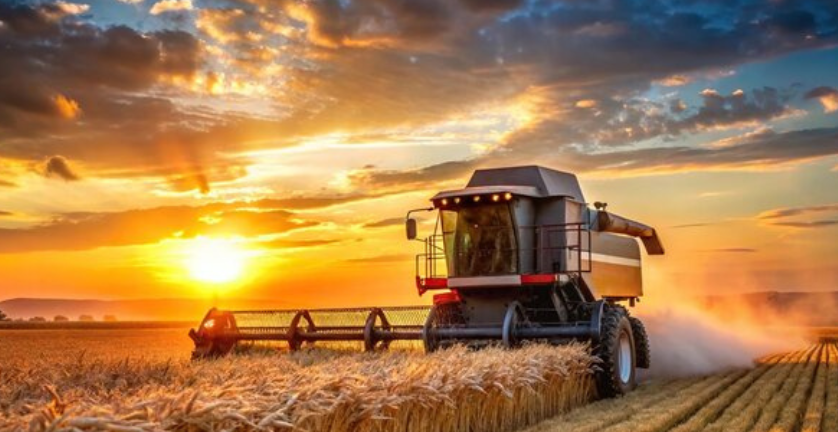
A new scientific study titled “Evaluation of Different Mechanized Wheat Harvesting Systems in Egypt: Case Study Within the EU-Kafi Programme” was published in AgriEngineering (2026), providing evidence-based recommendations on the most suitable mechanized wheat harvesting systems in Egypt. The study aims to identify the most appropriate solutions for small and medium-scale farmers, contributing to reduced grain losses, increased productivity, and strengthened food security. The findings show that there is no single harvesting machine suitable for all agricultural conditions, particularly in the small and fragmented farms of the Nile Delta. The research applied a methodology that evaluated different systems based on performance, cost, and grain loss, leading to recommendations that support more efficient and context-appropriate mechanization in Egypt.
The study confirmed that selecting the appropriate harvesting machine depends on farm size and economic capacity, highlighting the need for differentiated mechanization solutions tailored to each region. Results indicated that the 2-meter combine harvester is most suitable for small farms in the old lands, while the 4-meter combine performs better in large-scale new lands. The reaper–binder remains a practical option in mixed farming systems, whereas the 1.2-meter vertical combine ranked lower due to higher grain losses relative to its cost.
Notably, the study was initially conducted to assess and identify farmers’ actual machinery needs, ensuring that equipment selection is based on solid scientific evidence. Based on its findings, the EU-Kafi Programme procured the recommended agricultural machinery, reflecting its commitment to evidence-based sustainable agricultural development and to linking research with practical implementation in Egyptian fields.
In parallel with the study’s outcomes, the Italian Agency for Development Cooperation, with Italian experts from the Council for Agricultural Research and Agricultural Economics Analysis (CREA), is implementing training programmes for technicians and machine operators on optimal use, maintenance, and safety standards. This training, scheduled for next April, aims to strengthen technical capacities and ensure safe and efficient operation adapted to local conditions.
These efforts are further reinforced by the EU-KAFI Programme, funded by the European Union, which provides agricultural machinery to small and medium-scale farmers across the entire wheat production cycle from sowing to harvesting. Through this integrated approach combining scientific research, capacity building, and the procurement of appropriate equipment, the programme continues to enhance wheat productivity in Egypt and strengthen the national food security system.