
The Italian-Egyptian Debt Swap Program

The Italian-Egyptian Debt Swap Programme is one of the most important cooperation facilities between Italy and Egypt, both for the significant value of resources mobilized, and for the strong local ownership.

Reading time:

2 min

Since its establishment, AICS Cairo has played a key role in managing the Italian-Egyptian Debt Swap Program, which over the past 25 years  has established itself as one of the main pillars of the Italian-Egyptian partnership. Since 2001, through three successive agreements, the Program has enabled the conversion of approximately 350 million dollars of debt into resources for the implementation of more than 110 development initiatives in the country’s strategic sectors.

The Third Phase involved the debt installments due between April 2012 and January 2021, with a nominal value of 100 million dollars. The installments, converted into local currency and paid into a special Counterpart Fund at the Central Bank of Egypt, generated resources exceeding 926 million EGP, in addition to approximately 51 million EGP remaining from the previous Agreement.

These resources were invested in 30 initiatives in the sectors of food security (45%), agribusiness (15%), technical education (17.5%), environmental and cultural heritage (10.5%), and civil society (10%), as well as covering the operational and technical assistance costs of the Program (2%).

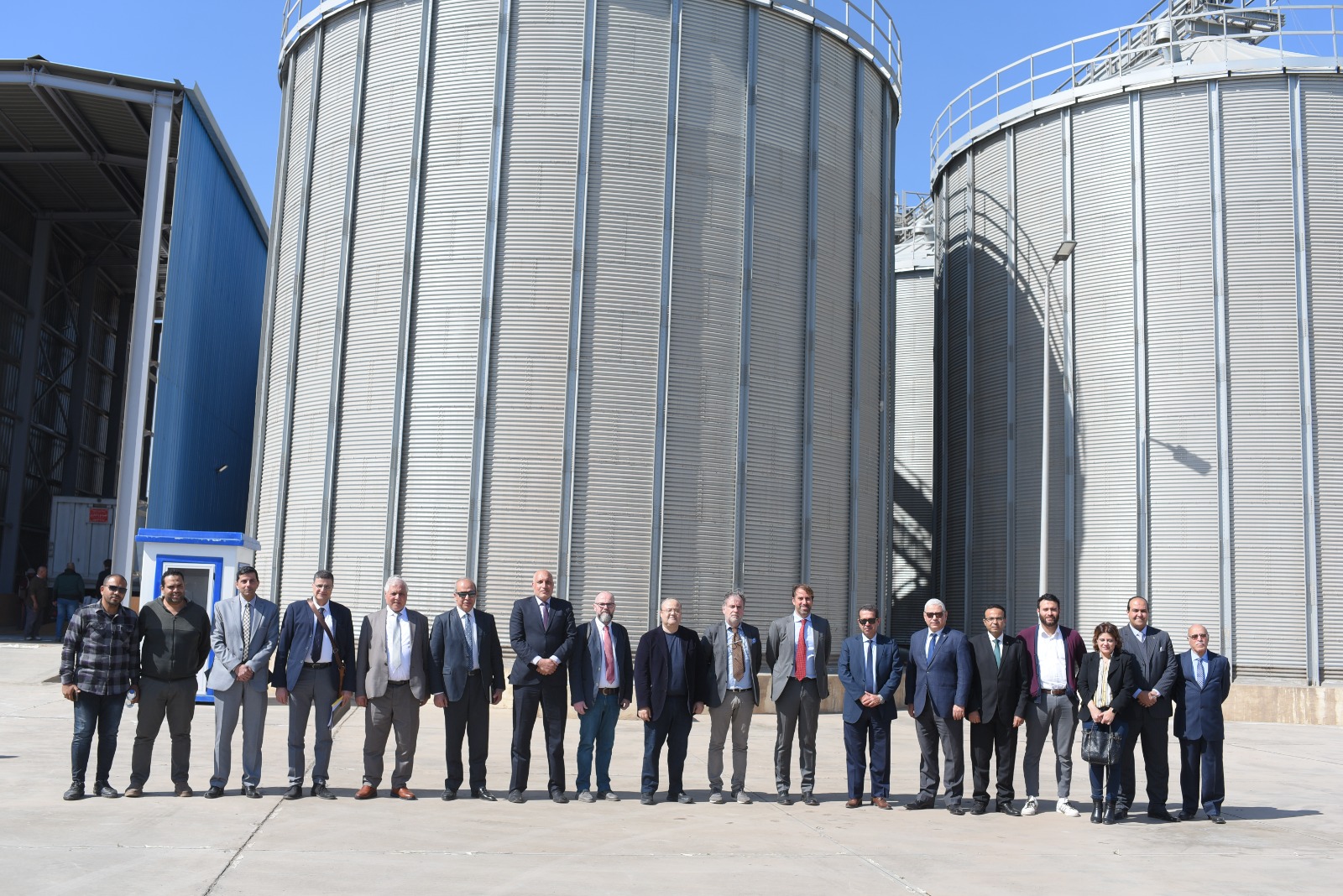
Key initiatives include the construction of six grain storage facilities and the simultaneous development of a pilot information system for the governance of cereal reserves at the national level; the creation of two integrated aquaculture districts in Alexandria and Port Said; support for technical education reform through the establishment of the Applied Technology Schools (ATS) Management Unit within the Ministry of Education and Technical Education, which guided the formalization of over 80 schools based on public-private partnerships; as well as a wide range of initiatives by Italian and Egyptian civil society for women’s economic empowerment, youth entrepreneurship, and child protection.

While the disbursement of resources to the projects and the final debt cancellation were completed in December 2024, in accordance with the terms and procedures set out in the Agreement, seven initiatives currently remain ongoing for a total value of over 14 million USD.

These include the expansion of three initiatives already launched with previous Italian funding: the Inclusive Green Growth Egypt (IGGE) initiative, implemented by UNIDO, which supports the startup and expansion of SMEs in the circular economy; the initiative to strengthen the Wadi El Gemal National Park, implemented by UNDP in continuity with the Environmental Cooperation Program (EIECP); and the PLAY 2 initiative, implemented by IOM, which supports the creation of an Applied Technology School for the tourism and hospitality sector in Fayyum.

Activities in the agribusiness sector also remain ongoing, with the construction of an aquaculture facility for red tilapia farming in North Sinai, and interventions supporting the quality of agricultural production through the development of vegetable seeds and laboratories for the analysis of pesticide and heavy metals residues, as a parallel financing to the EU-ZIRA3A delegated cooperation program managed by the Office.

In the cultural heritage sector, a further intervention supports the diversification of Egypt’s tourism by improving accessibility to the archaeological sites of Abu Sir and Abu Ghorab, part of the Memphis necropolis.

Finally, through the residual funds from the previous Agreement, the Program supports the strengthening of the private sector through the HAFIZ Platform.

Meanwhile, in light of the interest shown by the Egyptian Government in launching a new phase, Italy confirmed Egypt among the beneficiary countries of the new “Debt Relief for Africa” initiative, announced at the Rome Summit on Global Gateway and Piano Mattei on June 20, 2025. Within this initiative, the Egyptian component, currently under negotiation, will have a budget of 7.31 million euros, corresponding to 50% of the installments due in the 2026-2035 period.

On-going projects

  • Funding: EGP 64,500,000 (equivalent to USD 4,205,882 in debt conversion funds)
  • Geographical Area: Nationwide
  • Description: The initiative, also financed through a multi-bilateral contribution to the United Nations Industrial Development Organization (UNIDO), supports Egyptian small and medium-sized enterprises (SMEs) operating in the circular economy sector through the economic valorization and recycling of solid waste. In particular, funding provided through the Debt Swap Programme enabled the launch of the Circular Egypt programme, which offers integrated support to enterprises seeking to establish or expand activities in areas such as the production of organic fertilizers, recycled packaging and materials, sustainable fashion and textiles, and alternative fuels derived from waste. The programme provides matching grants of up to USD 125,000, complemented by a comprehensive package of technical assistance, including targeted training, business development support, and assistance in accessing bank financing.
  • Promoting Institution: Ministry of Environment
  • Implementing Agency: United Nations Industrial Development Organization (UNIDO)
  • Duration: 18 months
  • SDGs: SDG 8, SDG 9, SDG 17

  • Funding: EGP 14.176.000 (equivalent to USD 828.251 in debt conversion funds)
  • Geographical Area: North Sinai
  • Description: The project aims to establish a Red Tilapia hatchery in North Sinai, a local species of significant importance to the Egyptian aquaculture sector. The initiative builds on the experience gained through the IEDS programme, particularly through the establishment of the aquaculture clusters in Port Said and Alexandria. Funding provided through the Debt Swap Programme covers part of the construction costs of the facility, which is being implemented with co-financing from the National Company for Fisheries and Aquaculture (NCFA).
  • Promoting Institution: Ministry of Agriculture and Land Reclamation
  • Implementing Agency: Lake and Fisheries Resources Protection and Development Agency (LFRPDA)
  • Local Partner: National Company for Fisheries and Aquaculture (NCFA)
  • Duration: 36 months
  • SDGs: SDG 2

  • Funding: EGP 18.900.000 (equivalent to USD 1.092.822 in debt conversion funds)
  • Geographical Area: Beni Suef and Assiut Governorates
  • Description: The project supports Egypt’s national programme for the production of hybrid seeds, developed through controlled cross-breeding techniques to improve crop yields and enhance resistance to diseases and pests. The IEDS contribution focuses on eight vegetable and tuber crops: sweet pepper, eggplant, zucchini, cucumber, watermelon, melon, cowpea, and potato. In December 2024, part of the project resources was reallocated to a new component developed in synergy with the EU-ZIRA3A delegated cooperation programme managed by the AICS Cairo Office. This new component involves the establishment of two laboratories in the Governorates of Beni Suef and Assiut for the analysis of pesticide residues and heavy metals in agricultural products, thereby strengthening food safety monitoring and control systems
  • Promoting Institution: Ministry of Agriculture and Land Reclamation
  • Implementing Agency: Agricultural Research Centre (ARC)
  • Duration: 36 months
  • SDGs: SDG 2, SDG 3, SDG 12

  • Funding: EGP 15.688.981 (equivalent to USD 1.012.085 in debt conversion funds)
  • Geographical Area: Red Sea Governorate
  • Description: The project expands and strengthens a number of activities previously implemented under the third phase of the Egyptian-Italian Environmental Cooperation Programme (EIECP). The initiative combines biodiversity conservation efforts in Wadi El Gemal National Park—including the mapping of natural habitats, a survey of gazelle populations, mangrove restoration, and the development of a park waste management plan—with the direct involvement of local communities in the management and promotion of the protected area. As part of its local development component, the project supports beekeeping activities carried out by women from the Ababda community, aimed at the production and marketing of honey and cosmetic products. The initiative also promotes the development of eco-tourism routes and experiences within and around the park.
  • Promoting Institution: Ministry of Environment
  • Implementing Agency: United Nations Development Programme (UNDP)
  • Local Partner: NGO Abu Ghosoun
  • Duration: 18 months
  • SDGs: SDG 14, SDG 15, SDG 5

  • Funding: EGP 10.727.000 (equivalent to USD 1.773.732 in debt conversion funds)
  • Geographical Area: Giza Governorate
  • Description: The project aims to improve the safety, accessibility, and visitor experience of the archaeological sites of Abu Sir and Abu Ghorab, where an Italian archaeological mission is also active. The initiative seeks to facilitate public access to these sites and integrate them into the established tourism circuits of the Saqqara and Memphis areas, in line with Egypt’s national strategy to diversify its tourism offer. Planned interventions include the installation of perimeter fencing and lighting, the development of dedicated visitor pathways, the placement of informational signage, and the construction of sanitary facilities and visitor reception infrastructure.
  • Promoting Institution:Ministry of Tourism and Antiquities
  • Implementing Agency: Supreme Council of Antiquities (SCA)
  • Duration: 24 months
  • SDGs: SDG 11, SDG 8

  • Funding: EGP 48.042.862 (equivalent to USD 3.103.720 in debt conversion funds)
  • Geographical Area: Fayyum Governorate
  • Description: Debt Swap resources, channelled through the Ministry of Education and Technical Education, complement and strengthen activities already financed through a previous multi-bilateral contribution provided to the International Organization for Migration (IOM). The initiative supports the transformation of a technical institute in Fayoum into an Applied Technology School (ATS) specializing in the tourism and hospitality sector. The model provides the direct involvement of private-sector companies in the design of training curricula, with the aim of facilitating graduates’ transition into the labour market. In particular, the Debt Swap contribution finances the renovation of school facilities, the development of a business plan to ensure the long-term sustainability of the school, and the training of managerial and administrative staff.
  • Promoting Institution: Ministry of Education and Technical Education
  • Implementing Agency: International Organization for Migration (IOM)
  • Duration: 18 months
  • SDGs: SDG 4, SDG 8, SDG 17

  • Funding: EGP 12.174.065 (equivalent to USD 1.045.863 in debt conversion funds)
  • Geographical Area: Nationwide
  • Description: The project supports the development of the HAFIZ digital platform (privatesector.moic.gov.eg), a tool developed by the Ministry of Foreign Affairs, International Cooperation and Egyptian Expatriates to connect Egyptian small and medium-sized enterprises (SMEs) with financing opportunities, advisory services, and partnership initiatives available through international cooperation programmes. Through HAFIZ, businesses can access technical assistance services, online training programmes, and information on major financial instruments available to support private sector development. The platform was publicly launched during the presentation of the Egypt Startup Charter, in the presence of the Egyptian Prime Minister, highlighting its role in fostering entrepreneurship, innovation, and private sector engagement in Egypt’s development agenda.
  • Promoting Institution: Ministry of Foreign Affairs, International Cooperation and Egyptian Expatriates
  • Implementing Agency: Ministry of Foreign Affairs, International Cooperation and Egyptian Expatriates – Private Sector Engagement Unit
  • Duration: 18 months
  • SDGs: SDG 9, SDG 8, SDG 17

Last update: 30/06/2026, 9:08