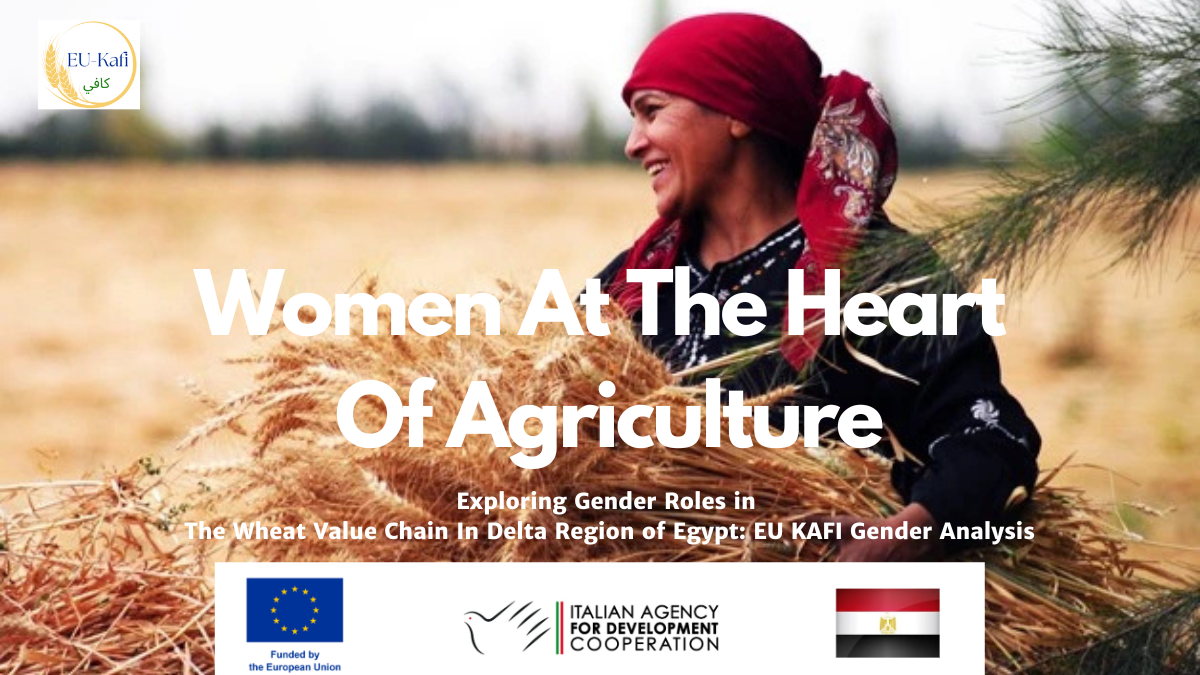
In the face of climate change and economic pressures on household food systems, Egypt has a powerful opportunity: investing in women who play a central and growing role in the wheat sector. Women across the country, especially in the Delta region, where wheat cultivation is most concentrated, contribute significantly to planting, harvesting, post-harvest handling, seed processing, and farm management. Their expanding participation strengthens agricultural productivity, household resilience, and national food security.
Yet, many women still face barriers that limit their full potential, including restricted access to agricultural training, finance, modern tools, and leadership roles. Time-intensive manual labor, limited access to climate-smart technologies, and structural gaps such as under-resourced cooperatives or limited opportunities to influence policy decisions also affect their productivity. Addressing these challenges is not only essential for advancing equality, but it is also a strategic investment in Egypt’s wheat sector and its resilience.
In response to these challenges, the EU-Kafi Programme, funded by the European Union and implemented by AICS Cairo in collaboration with the Agriculture Research Center, is ensuring equitable access to resources, knowledge, technology, and leadership opportunities for women across the wheat value chain.
EU-Kafi: Practical, Community-Centered Interventions for Women
The EU-Kafi Programme is working directly with farming communities to promote a culture of equality and inclusion. The project aims to ensure that women farmers, workers, and entrepreneurs are equipped with the skills, tools, and enabling environment they need to thrive. Key project activities include:
- Expanding access to training and knowledge: The programme provides tailored agricultural training, climate-smart skills, and digital learning, reaching over 400,000 farmers, with women representing 20%.
- Improving access to modern tools and technology: EU-Kafi supports the introduction of upgraded machinery, post-harvest equipment, and women-friendly technologies that reduce manual labor and boost productivity. Mechanization efforts have expanded across more than 48,000 feddans.
- Supporting certified seed production: Women are highly engaged in laboratory testing, seed processing units, and certified seed production, expanding their participation in high-value agricultural activities.
- Strengthening community support systems: The programme promotes positive social norms that encourage shared decision-making, women’s participation, and equal access to agricultural services, and ensures women’s voices shape decisions affecting agricultural development.
“When women have access to knowledge and resources, then opportunities become a reality and entire communities’ benefit. The European Union works together with all women and men of Egypt to secure necessary food supply and make sure everybody participates in the development of rural areas in the country,” said Angelina Eichhorst, European Union Ambassador to Egypt.
The Study: Evidence to Guide Gender-Responsive Actions
To inform these interventions, the EU-Kafi Programme conducted a gender analysis in five wheat-producing governorates: Menoufia, Sharqia, Gharbia, Beheira, and Dakahlia. The study examined women’s roles, access to resources, training gaps, and opportunities for enhanced participation. The methodology included household surveys, focus group discussions, and interviews with farmers, cooperatives, and local stakeholders, offering an evidence-based foundation for project planning. The gender analysis provides a clear roadmap for strengthening women’s participation in the wheat value chain through three interconnected pillars:
- Access: Improve women’s access to agricultural training, financial services, modern tools, and women-friendly service centers, while expanding opportunities for land-use and productive resources.
- Awareness: Promote community-led dialogues and strengthening technical skills, encourage shared decision-making, and foster positive social norms that value women’s contributions in agriculture.
- Empowerment: Strengthen women’s leadership in cooperatives and community groups, expand the presence of female extension agents, and promote inclusive policies that ensure extension and advisory services are accessible to all and that women’s voices actively shape the future of the wheat sector.
“EU-Kafi Gender Analysis study provides valuable direction for ensuring that project interventions meet women’s needs and contribute to a more inclusive agricultural sector,” said Tiberio Chiari, Director of AICS Cairo. “Our commitment is to support women in accessing tools, training, and opportunities that enhance their roles as key actors in the wheat value chain.”
Toward a More Inclusive Wheat Sector
Empowering women in Egypt’s wheat sector is not only a matter of inclusiveness, it’s a strategic investment in stronger, more resilient food systems. By expanding women’s access to tools, training, and opportunities, and by fostering inclusive community practices, the EU-Kafi Programme is helping ensure that women’s leadership and skills continue to drive productivity and food security across Egypt.
“Egypt’s wheat sector cannot thrive without women’s full participation,” said Adel Abd Azim, Deputy Minister of Agriculture for Extension Services. “Through the EU-Kafi Programme, the Government of Egypt is committed to advancing gender equity, increasing productivity, and reducing losses across the wheat value chain. Our priority is to ensure that women have the skills, resources, and opportunities they need to contribute meaningfully to agricultural development and national food security.”
To support evidence-based, gender-responsive agricultural development, the EU-Kafi Programme will share the full gender analysis study with partners, practitioners, and interested stakeholders.