
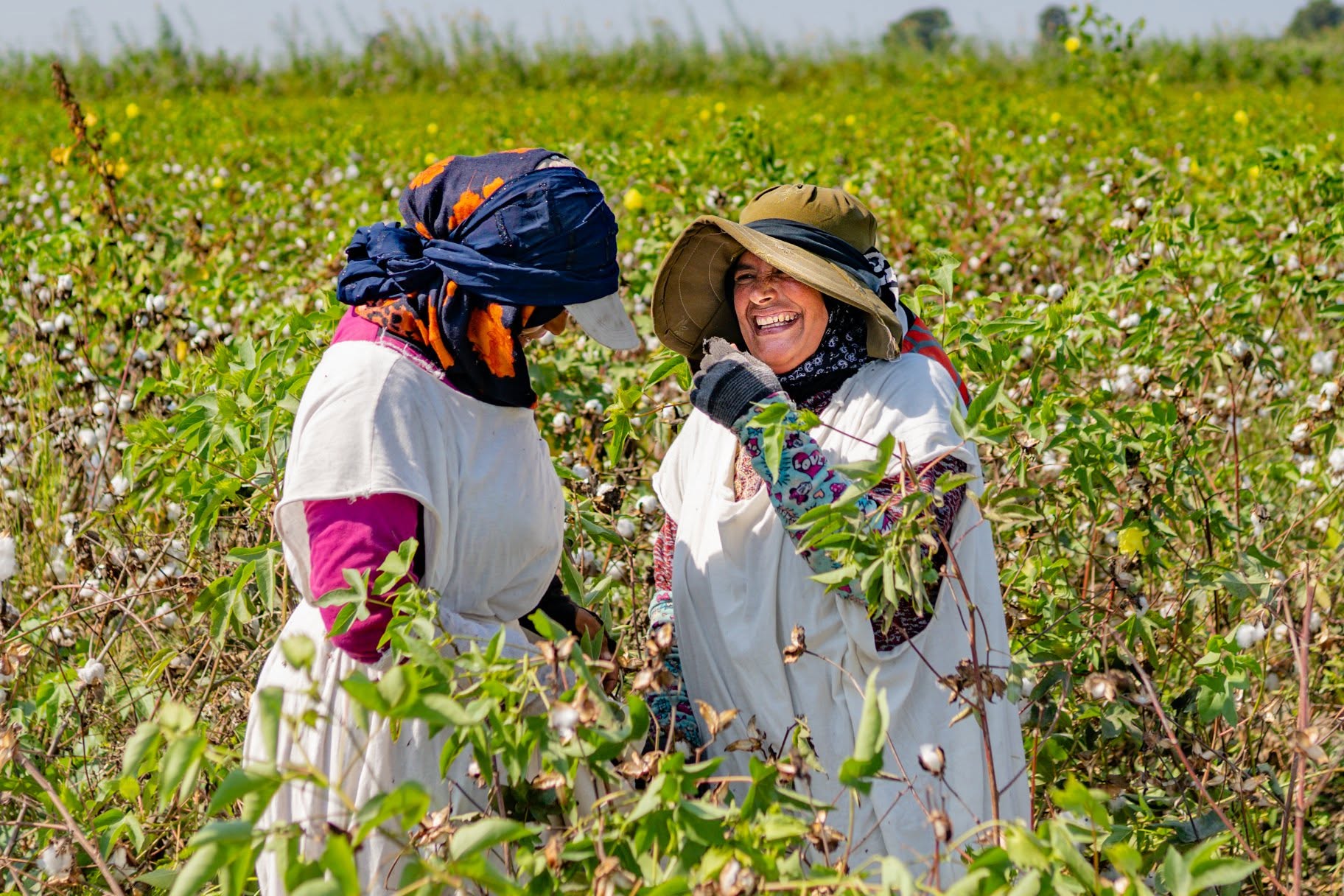
The project builds on the achievements of the first phase of the Development of Egypt’s Long and Extra-Long Staple Cotton Value Chain initiative and is founded on strong partnerships with Egyptian institutions, agricultural cooperatives, and national and international private sector stakeholders. Its objective is to further strengthen the strategies already launched, particularly through capacity-building activities across the entire cotton value chain.
Egyptian cotton is internationally recognized as one of the world’s highest-quality natural fibres. At the same time, however, its production is facing increasing scrutiny regarding sustainability. Despite its global reputation, Egyptian cotton has gradually lost market share in the premium cotton segment due to growing international competition, the high fragmentation of the sector, and a global shift towards medium-staple fibres. Moreover, the textile industry is becoming increasingly attentive to the environmental and social impacts of production. While this represents a significant market opportunity, it also poses major challenges for primary producers, who are required to comply with increasingly demanding sustainability standards.
In this context, the Egyptian cotton value chain must transition towards more sustainable and competitive production models based on innovation, green technologies, human capital development, transparency, traceability, and circular economy approaches.
In partnership with key Sistema Italia companies, including Filmar and Gruppo Albini, both operating in Borg El Arab, the Italian Agency for Development Cooperation (AICS), together with UNIDO, is supporting the strengthening of cotton production and marketing in line with internationally recognized sustainability principles and certification schemes increasingly required by global retailers and leading fashion brands. Through technical assistance and training, the project supports producers in adopting environmentally and socially sustainable practices while promoting transparency, traceability, circularity, and the implementation of the Better Cotton Standard in Egypt. This approach contributes to improving the environmental and social performance of the sector, strengthening access to international markets, and creating greater economic and social opportunities for local communities.