
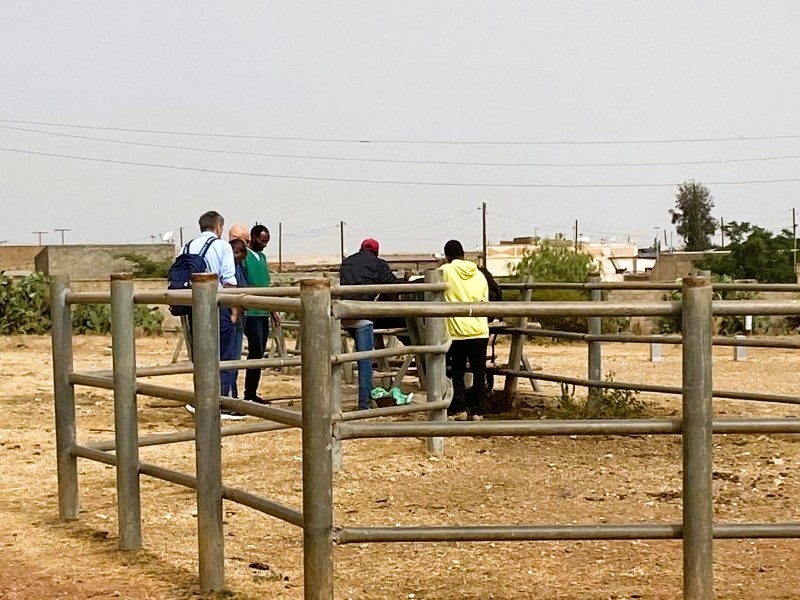
Supporting Eritrea’s National Brucellosis and Bovine Tuberculosis Control Programme (EC4bTB)

EC4bTB is a data-driven initiative that applies the One Health approach by integrating animal, human, and environmental health. Through strengthened diagnostic capacity, digital innovation, and epidemiological surveillance, the project supports Eritrean institutions in developing a national programme for the eradication of brucellosis and bovine tuberculosis

Reading time:

1 min

Photo: IZS

Through the EC4bTB initiative, implemented by the Istituto Zooprofilattico Sperimentale dell’Abruzzo e del Molise (IZSAM), the Italian Agency for Development Cooperation (AICS) supports a technical cooperation project aimed at improving the diagnosis, control, and prevention of zoonotic infectious animal diseases—diseases that can be transmitted directly or indirectly between animals and humans.

The initiative supports Eritrean institutions in developing a national programme for the eradication of brucellosis (BR) and bovine tuberculosis (TB) by strengthening national capacities for disease diagnosis, surveillance, prevention, and control in dairy cattle farms, particularly in the Debub and Maekel Regions, which have the country’s highest concentrations of both human populations and dairy cattle.

Within this framework, IZSAM promotes the One Health approach, integrating animal, human, and environmental health to improve the productivity of the dairy sector while reducing the risk of zoonotic disease transmission, thereby contributing to public health and national food security.

The project also delivers significant results in the digitalization of animal health information systems through the collection and management of disease data, the optimization of diagnostic processes, and the epidemiological analysis of laboratory and field data to identify risk factors and strengthen evidence-based decision-making.

EC4bTB is a data-driven initiative built on systematic data collection, analysis, and evaluation. By placing scientific evidence at the center of decision-making, the project enables national public health and food safety institutions to improve the effectiveness and efficiency of their interventions, harness digital technologies for both public and private stakeholders, and define measurable, realistic, and achievable improvement objectives.

Adopting a community-based participatory approach, the initiative supports not only national institutions but also livestock farmers and private veterinary professionals in identifying priorities and developing sustainable solutions tailored to local needs.

General Overview

  • Duration: 24 months (September 2025 – September 2027)
  • Geographical coverage: Maekel (Central Region) and Debub (Southern Region)
  • Budget: €2,000,000
  • Implementing partner: National Animal and Plant Health Laboratory (NAPHL)
  • Target groups / beneficiaries: National Animal and Plant Health Laboratory (NAPHL) in Asmara, the regional veterinary laboratory in Debub, and the Veterinary Services of the Ministry of Agriculture.

Overall Objective: To protect public health and promote food security in Eritrea through the One Health approach.

Specific Objective: To support Eritrea’s national programme for the eradication of brucellosis (BR) and bovine tuberculosis (TB) in dairy cattle farms in the Central (Maekel) and Anseba Regions.

Component 1 – Digitalization

  • Development of digital management software
  • Training on database management

Component 2 – Diagnosis, Surveillance and Control of Brucellosis and Bovine Tuberculosis

  • Technical assistance to NAPHL veterinary personnel
  • Disease surveillance and epidemiological assessment

Component 3 – Awareness Raising and Training on Animal Health Risks

  • Dissemination of project results
  • Promotion of best practices for animal health risk management

  • Digital animal traceability systems and laboratory information management systems are developed and operational.
  • A robust national system for the diagnosis, surveillance, and control of brucellosis and bovine tuberculosis is established, with strengthened early detection and rapid response capacities.
  • Public authorities are better informed about the health risks associated with brucellosis and bovine tuberculosis, while veterinary professionals strengthen their capacities in risk communication.

Last update: 28/07/2026, 8:47